
Paducah Bankruptcy Records
Paducah sits at the heart of western Kentucky. Residents here access federal bankruptcy records through the Western District court system. The Paducah Division office serves McCracken County and surrounding areas. People search these records for many reasons. Some verify their own case status. Others research property liens or business history. The records remain public. Anyone can view them with proper guidance. This page helps Paducah residents find what they need. We explain the search process step by step. You will learn where to go and what to expect. The court system provides official documents. We help you navigate it with ease.
Start your Paducah Bankruptcy Records search using the tools above.
Paducah Bankruptcy Court Facts
Paducah Bankruptcy Records Court Location
The Paducah Division office serves western Kentucky. It operates as a non-staffed facility. This means no clerks work on site. All case filings go to Louisville. The office remains open for public access. Visitors can use the public terminal. This terminal connects to the PACER system. You can view case records there. The building stands in downtown Paducah. It is easy to find. The address is 501 Broadway. This is the Federal Building. Parking is available nearby. The office uses Central Time. Keep this in mind when visiting.
Many Paducah residents file Chapter 7 cases. Others choose Chapter 13 for repayment plans. Business owners may file Chapter 11. All these cases start with paperwork. The forms are available online. You can also get them at the court. Some people hire attorneys. Others file pro se. This means without a lawyer. The court allows both options. Self-filers must follow all rules. The process requires attention to detail. Missing documents cause delays. The court sends notices by mail. Keep your address current. This ensures you receive updates.
Paducah Bankruptcy Records include many document types. Petitions start each case. Schedules list assets and debts. The means test form shows income levels. Trustees file reports as cases progress. Discharge orders end successful cases. Dismissal orders close others. All these papers matter. They prove what happened in court. You may need copies years later. Banks often request them. Employers might ask for proof. Landlords check for prior filings. Having your records helps in these situations. The court keeps them for years. You can access them anytime.
Below is the contact information for the Paducah Division office. Remember that staff work in Louisville. Call that office for questions. The Paducah location accepts filings. But processing happens in Louisville. Plan ahead for this arrangement. Most people file online now. This speeds up the process. You get a case number faster. The system sends instant confirmation. This is the modern way to file.
| Court | Western District of Kentucky - Paducah Division |
|---|---|
| Address |
Federal Building 501 Broadway Paducah, KY 42001 |
| Phone | (502) 627-5700 (staffed through Louisville) |
| Status | Non-staffed office |
| Website | kywb.uscourts.gov |
View the courthouse location where Paducah Bankruptcy Records are maintained.
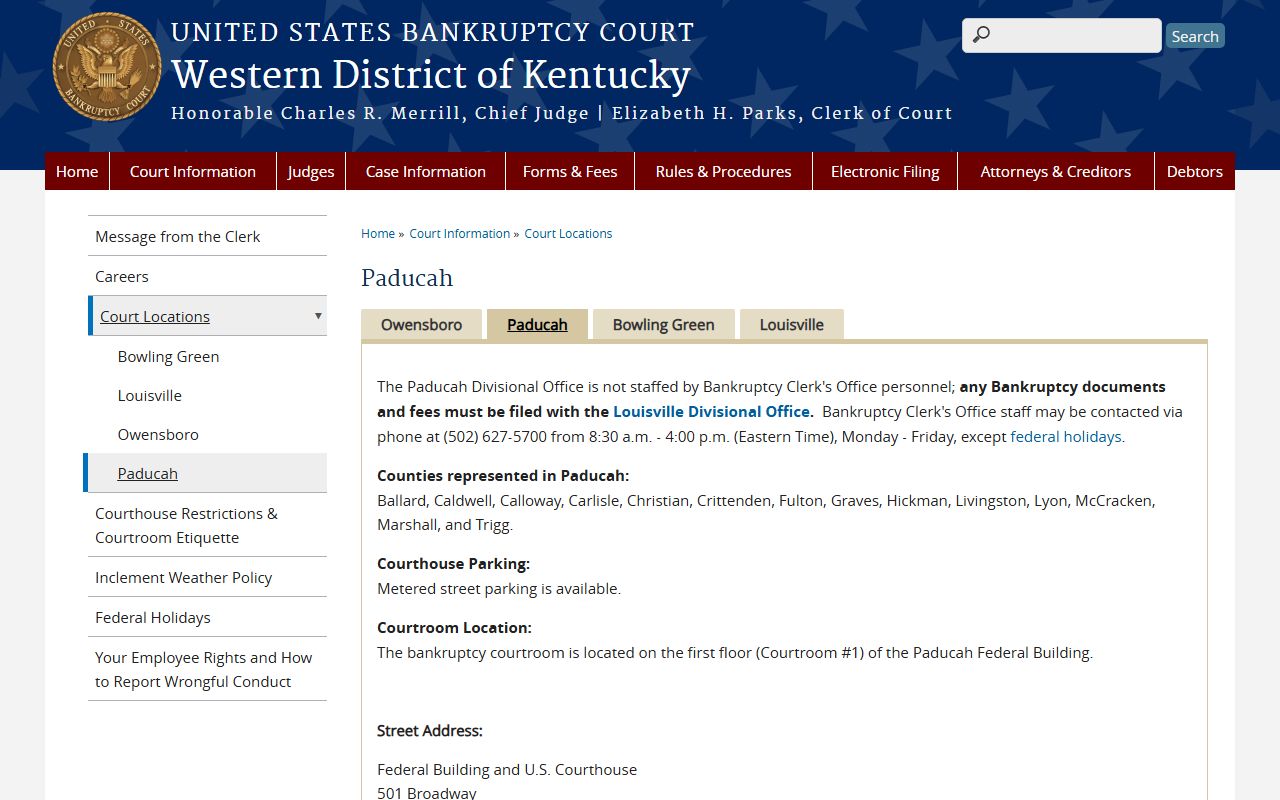
The Federal Building houses the local division for western Kentucky filings.
How to Search Paducah Bankruptcy Records
Searching Paducah Bankruptcy Records requires some preparation. Start with basic case details. You need a name or case number. The filing date helps too. This information narrows your search. The PACER system holds federal records. It covers all Kentucky districts. You must create an account first. Registration is free online. Then you add a payment method. Searches cost ten cents per page. This fee adds up quickly. Plan your search before starting. Know what you need to find. This saves time and money.
The PACER homepage lists search options. You can search by party name. This finds all cases for one person. You can search by case number. This goes directly to one case. You can also browse courts. Select the Western District of Kentucky. Then choose the Paducah Division. This shows all local filings. The system displays case summaries. Click any case for details. You will see the docket sheet. This lists all court events. Documents appear as links. Click to view them. Each page view costs money. Download only what you need.
Some Paducah records are free. The court provides public terminals. These computers have PACER access. You pay no fees at the terminal. The Paducah office has one. Visit during business hours. Bring a USB drive. You can save documents there. This avoids printing costs. The terminal prints for a fee. Copying is cheaper at home. Plan to spend some time. Searches take patience. Old cases need careful looking. Names may have spelling variants. Try different search terms. Check maiden names too. Businesses may have dba names. These are "doing business as" names.
Third-party services exist as well. Some companies offer record searches. They charge flat fees. This can save money for large requests. Compare prices before choosing. Check their data sources. Good services use PACER directly. They should provide official documents. Avoid services with vague descriptions. You want actual court records. Not summaries or databases. The official record comes from the court. Nothing else has the same value. For legal matters, use official sources. This protects your interests.
View the PACER system interface used to find Paducah Bankruptcy Records online.
Online access makes searching records convenient from any location.
Paducah Bankruptcy Records Document Types
Paducah Bankruptcy Records contain many document types. Each serves a purpose. Understanding them helps your search. You will know what to request. The petition is the main filing. It starts the bankruptcy case. It lists basic debtor information. Names, addresses, and social security numbers appear. The petition states the chapter type. This is 7, 11, or 13. It also lists the filing date. This date matters for legal reasons. The automatic stay begins then. This stops most collection actions.
Schedules accompany every petition. These detail financial information. Schedule A lists real property. This includes homes and land. Schedule B covers personal property. Cars, furniture, and bank accounts go here. Schedule C claims exemptions. These protect certain assets. Schedule D lists secured debts. Mortgages and car loans appear. Schedule E covers priority debts. Taxes and child support are priority. Schedule F lists unsecured debts. Credit cards and medical bills go here. Schedules I and J show income and expenses. These determine repayment ability. All schedules must be accurate.
The means test form is crucial. It decides Chapter 7 eligibility. Higher income may require Chapter 13. The form compares income to state median. Kentucky has specific standards. The calculation includes six months of income. It allows certain deductions. These include taxes and secured debt payments. The result shows disposable income. Negative results allow Chapter 7. Positive results suggest Chapter 13. This test affects many filers. Review it carefully if applicable.
Motion documents appear throughout cases. These request court action. Motions to lift stay are common. Creditors file these to collect collateral. Motions to dismiss also occur. These end cases for various reasons. Objections to discharge appear too. Creditors or trustees file these. They challenge debt elimination. The court rules on each motion. Orders record these decisions. Final orders end cases. Discharge orders eliminate debts. Dismissal orders close cases without discharge. All orders matter for your records.
Trustee reports track case progress. The trustee oversees each case. They review all filings. They conduct 341 meetings. These are creditor meetings. Debtors must attend. The trustee files reports afterward. These note meeting outcomes. They list required amendments. They track asset discoveries. Trustees also file final reports. These show case closure details. Asset cases have distribution reports. These detail creditor payments. All trustee documents are public. They add context to case records.
Access the Western District case information system for Paducah Bankruptcy Records.
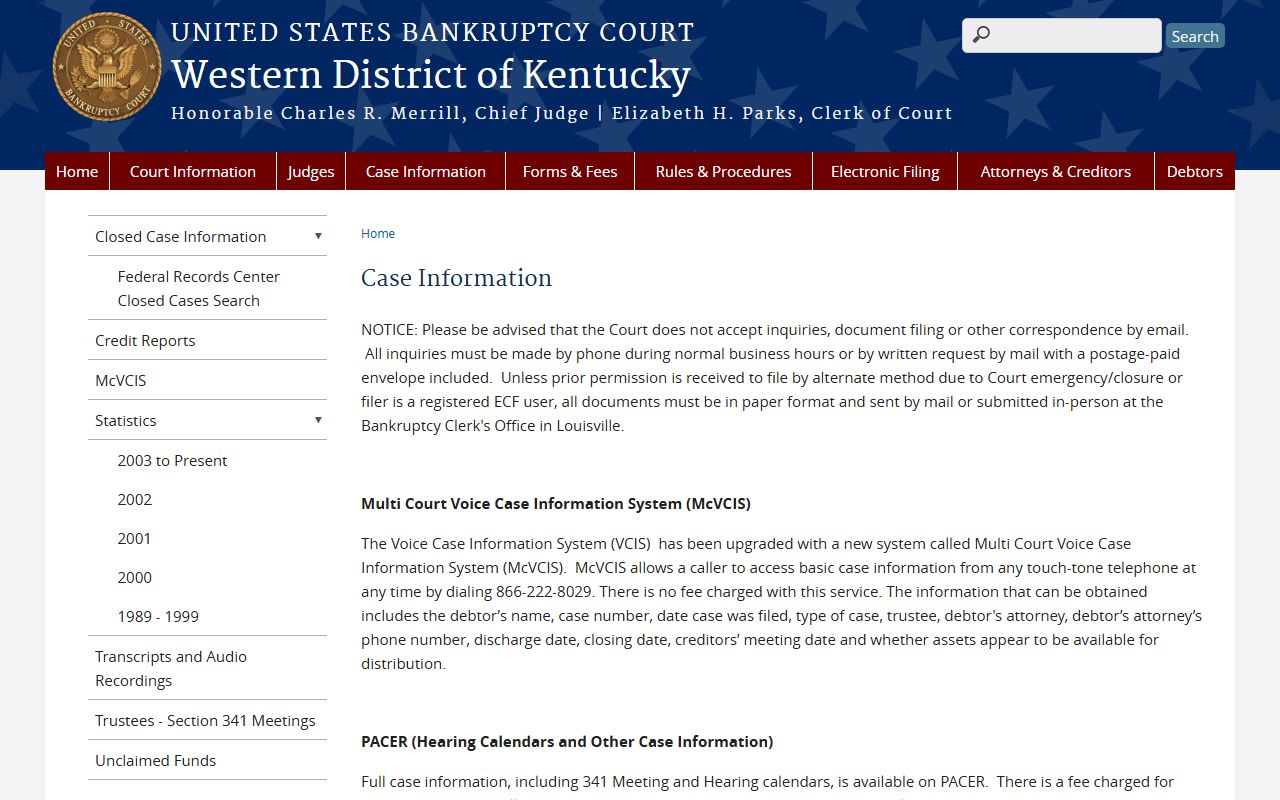
The district website provides forms and filing instructions for all cases.
Paducah Bankruptcy Records Filing Process
Filing for bankruptcy in Paducah follows federal rules. The process starts with preparation. Gather all financial documents. You need tax returns. Get pay stubs for six months. Collect bank statements. List all debts with creditor addresses. Note all property you own. Include retirement accounts. Value everything honestly. The court checks these values. Undervaluing causes problems. Overvaluing hurts exemption claims. Accuracy is essential throughout.
Complete the required credit counseling. This must happen before filing. Approved agencies offer courses. They take about ninety minutes. You get a certificate when done. This certificate must accompany your petition. It is valid for six months. Do not take it too early. The court rejects old certificates. Many agencies offer online courses. Some have phone options. Prices vary between providers. Shop around for reasonable rates. The certificate has a unique number. The court verifies this number. Keep your copy safe.
File your petition and schedules. You can file online. This uses the courts electronic system. It is called CM/ECF. Attorneys must use this system. Pro se filers may use it too. Some prefer paper filing. The Paducah office accepts paper. Mail it to the Louisville address. Use certified mail for proof. Include the filing fee. Or request a fee waiver. Waivers require form submissions. Show you cannot afford the fee. The court reviews your request. If granted, you pay nothing. Otherwise, pay in installments.
After filing, the automatic stay activates. This stops most collections. Creditors cannot call you. They cannot garnish wages. Foreclosure stops temporarily. The stay gives you breathing room. It lets you reorganize finances. Some debts are not stayed. Child support continues. Certain government fines are not stopped. Some tax actions proceed. Secured creditors may file motions. They can request stay relief. This allows repossession or foreclosure. The court decides these requests. Respond quickly to any motion. Missing deadlines hurts your case.
Attend the 341 meeting of creditors. This happens about one month after filing. The trustee runs this meeting. Creditors may attend. Most do not appear. You must answer questions. Bring photo identification. Bring your social security card. The trustee verifies your identity. They ask about your assets. They confirm your income. They check for missing information. Be honest in all answers. Lying has serious consequences. The meeting lasts about ten minutes. Simple cases go quickly. Complex cases take longer.
Complete debtor education after filing. This is the second course. You must finish it. Do this before discharge. The course teaches budgeting. It covers financial management. You need the certificate. File it with the court. Without it, you get no discharge. The case may close without debt relief. Do not forget this step. Many people do. Then they must reopen cases. This costs extra money. Save yourself the trouble. Take the course on time.
Find local forms and filing instructions for Paducah Bankruptcy Records.
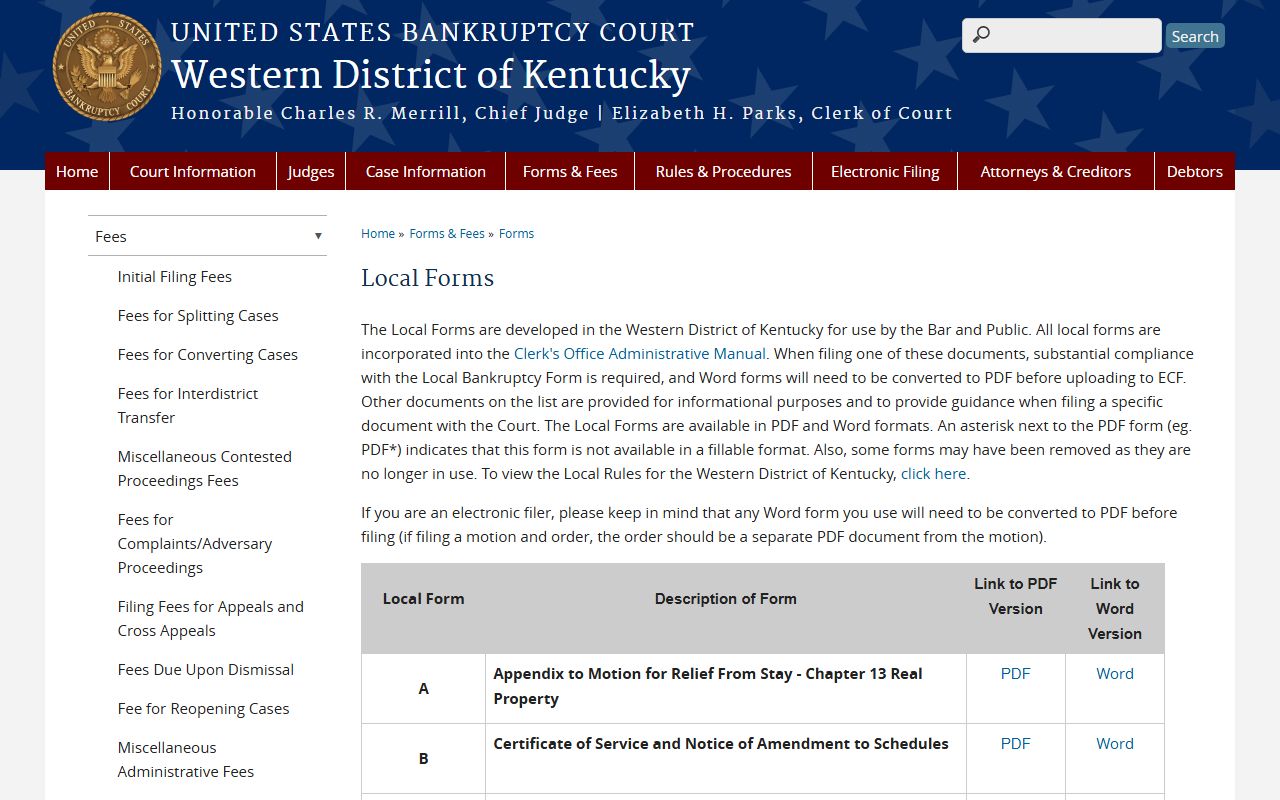
Proper forms ensure your case proceeds without delays or rejections.
Paducah Bankruptcy Records Legal Resources
Legal help is available in Paducah. You do not need to navigate alone. Several organizations assist residents. Some offer free services. Others charge reduced rates. Know your options before starting. This helps you choose wisely. Quality representation matters. But so does affordability. Balance these factors well.
Legal Aid of the Bluegrass serves western Kentucky. They help low-income residents. Their services include bankruptcy advice. They may provide representation. Eligibility depends on income. You must meet poverty guidelines. Assets also affect eligibility. Contact them to apply. Their Paducah office accepts calls. You can also visit in person. Bring financial documents. They will review your situation. Services vary by case. Some people get full representation. Others receive brief advice. Both help your case proceed.
Kentucky Lawyer Referral Service connects you to attorneys. They screen lawyers for experience. You get a consultation. This usually costs a small fee. Then you decide about hiring. The initial meeting helps you understand options. Ask about total costs. Get fee agreements in writing. Bankruptcy attorneys often charge flat fees. This covers most services. Extra work may cost more. Clarify this upfront. Know what you are paying for. Good attorneys explain everything.
Pro se resources help self-filers. The court provides forms. These are on the website. Instructions accompany each form. Read them carefully. The court also has help desks. These are for general questions. Staff cannot give legal advice. But they explain procedures. They tell you what forms to use. They check if papers are complete. They do not fill forms out. You must do that yourself. Be prepared when visiting. Have specific questions ready. This makes the visit productive.
Online resources supplement local help. The court website has guides. These explain bankruptcy basics. They cover filing procedures. They list local rules. The national PACER site has tutorials. These show how to search records. Legal Aid sites have articles. These explain debtor rights. Use all available resources. Knowledge helps your case. It also reduces stress. You will know what to expect. This confidence helps you succeed.
Access legal aid services for help with Paducah Bankruptcy Records.

Legal assistance is available for qualifying residents of McCracken County.
Nearby Paducah Bankruptcy Records
Other western Kentucky cities have similar court arrangements. Residents in these areas also use the Paducah Division. Some file directly in Louisville. It depends on your location. Check which division serves you. This affects where you file. It also affects which terminal to use. Know your proper venue.
Hopkinsville residents may use the Paducah office. It is closer than Louisville. Owensboro filers have choices. They can use either location. Henderson cases often go to Evansville. That is in Indiana. But some file in Kentucky. Bowling Green uses the Louisville office. They are in different divisions. Check your county assignment. This determines proper filing. The court website lists counties. Find your location there. Follow the designated division rules.
These nearby cities have similar resources. They share the same district court. Local rules apply everywhere. Forms are identical across divisions. Procedures do not change. This standardization helps everyone. You know what to expect. No matter which office you use. The system stays consistent. This benefits Kentucky filers.
McCracken County Bankruptcy Records
Paducah is located in McCracken County. View the county page for additional regional information and resources related to bankruptcy records in the area.